CASP9
Gene Information
- Official Symbol: CASP9
- Official Name: caspase 9
- Aliases and Previous Symbols: N/A
- Entrez ID: 842
- UniProt: P55211
- Interactions: BioGRID
- PubMed articles: Open PubMed
- OMIM: Open OMIM
Function Summary
- Entrez Summary: This gene encodes a member of the cysteine-aspartic acid protease (caspase) family. Sequential activation of caspases plays a central role in the execution-phase of cell apoptosis. Caspases exist as inactive proenzymes which undergo proteolytic processing at conserved aspartic residues to produce two subunits, large and small, that dimerize to form the active enzyme. This protein can undergo autoproteolytic processing and activation by the apoptosome, a protein complex of cytochrome c and the apoptotic peptidase activating factor 1; this step is thought to be one of the earliest in the caspase activation cascade. This protein is thought to play a central role in apoptosis and to be a tumor suppressor. Alternative splicing results in multiple transcript variants. [provided by RefSeq, May 2013]. COMPLETENESS: complete on the 3' end.
- UniProt Summary: N/A
Pfam Domains GO Terms
Pfam Domains
| CARD |
| Peptidase C14 |
GO Terms
| apoptosome |
| glial cell apoptotic process |
| activation of cysteine-type endopeptidase activity involved in apoptotic process by cytochrome c |
| cysteine-type endopeptidase activity involved in apoptotic signaling pathway |
| response to cobalt ion |
| cysteine-type endopeptidase activity involved in apoptotic process |
| platelet formation |
| platelet morphogenesis |
| leukocyte apoptotic process |
| cellular response to dexamethasone stimulus |
| extrinsic apoptotic signaling pathway in absence of ligand |
| signal transduction in absence of ligand |
| response to dexamethasone |
| enzyme activator activity |
| response to ischemia |
| positive regulation of neuron apoptotic process |
| cellular response to glucocorticoid stimulus |
| cellular response to corticosteroid stimulus |
| intrinsic apoptotic signaling pathway in response to DNA damage |
| peptidase activity |
| cellular response to UV |
| activation of cysteine-type endopeptidase activity involved in apoptotic process |
| cellular response to ketone |
| cysteine-type endopeptidase activity |
| positive regulation of neuron death |
| response to antineoplastic agent |
| extrinsic apoptotic signaling pathway |
| signal transduction in response to DNA damage |
| cellular response to light stimulus |
| SH3 domain binding |
| positive regulation of cysteine-type endopeptidase activity involved in apoptotic process |
| response to estradiol |
| response to UV |
| response to glucocorticoid |
| intrinsic apoptotic signaling pathway |
| positive regulation of cysteine-type endopeptidase activity |
| response to corticosteroid |
| positive regulation of endopeptidase activity |
| cellular response to radiation |
| cellular response to xenobiotic stimulus |
| cellular response to steroid hormone stimulus |
| positive regulation of peptidase activity |
| response to ketone |
| regulation of neuron apoptotic process |
| regulation of cysteine-type endopeptidase activity involved in apoptotic process |
| regulation of response to DNA damage stimulus |
| myeloid cell differentiation |
| regulation of cysteine-type endopeptidase activity |
| kidney development |
| aging |
| apoptotic signaling pathway |
| renal system development |
| response to xenobiotic stimulus |
| response to antibiotic |
| response to light stimulus |
| regulation of neuron death |
| response to lipopolysaccharide |
| cellular response to environmental stimulus |
| cellular response to abiotic stimulus |
| urogenital system development |
| response to molecule of bacterial origin |
| response to steroid hormone |
| positive regulation of proteolysis |
| response to metal ion |
| cellular response to drug |
| regulation of endopeptidase activity |
| response to radiation |
| regulation of peptidase activity |
| protein kinase binding |
| cellular response to lipid |
| response to inorganic substance |
| cellular response to organic cyclic compound |
| cell morphogenesis involved in differentiation |
| hemopoiesis |
| protein-containing complex |
| cellular response to hormone stimulus |
| hematopoietic or lymphoid organ development |
| positive regulation of apoptotic process |
| immune system development |
| positive regulation of programmed cell death |
| response to bacterium |
| positive regulation of cell death |
| cell morphogenesis |
| regulation of proteolysis |
| regulation of cellular response to stress |
| positive regulation of hydrolase activity |
| cellular response to DNA damage stimulus |
| cellular component morphogenesis |
| response to lipid |
| anatomical structure formation involved in morphogenesis |
| response to hormone |
| response to organic cyclic compound |
| apoptotic process |
| response to drug |
| programmed cell death |
| cellular response to oxygen-containing compound |
| cell death |
| response to abiotic stimulus |
| cellular response to endogenous stimulus |
| mitochondrion |
| proteolysis |
| regulation of hydrolase activity |
| response to other organism |
| response to external biotic stimulus |
| response to biotic stimulus |
| positive regulation of catalytic activity |
| response to endogenous stimulus |
| regulation of response to stress |
| regulation of apoptotic process |
| response to oxygen-containing compound |
| regulation of programmed cell death |
| positive regulation of cellular protein metabolic process |
| cell development |
| regulation of cell death |
| intracellular signal transduction |
| cellular response to stress |
| positive regulation of protein metabolic process |
| positive regulation of molecular function |
CRISPR Data
Compound Hit Most Correlated Genes in Chemogenomics Tissues where Essential in the Avana Dataset (DepMap 20Q1)
Compound Hit
Most Correlated Genes in Chemogenomics
| Gene | Correlation |
|---|---|
| BAK1 | 0.799 |
| APAF1 | 0.79 |
| HCCS | 0.752 |
| MARCH5 | 0.751 |
| CYCS | 0.728 |
| VDAC2 | 0.722 |
| PLAA | 0.718 |
| UBQLN1 | 0.712 |
| DIABLO | 0.661 |
| DOHH | 0.656 |
| SERF2 | 0.629 |
| HSPD1 | 0.627 |
| TRIAP1 | 0.596 |
| ENY2 | 0.593 |
| FAF2 | 0.591 |
| THG1L | 0.589 |
| BAP1 | 0.581 |
| RPTOR | 0.57 |
| METAP2 | 0.561 |
| GFPT1 | 0.557 |
| UAP1 | 0.552 |
| ROMO1 | 0.55 |
| MFN1 | 0.537 |
| ATP5J | 0.533 |
| RAD23B | 0.531 |
| GMPPB | 0.526 |
| CSNK2B | 0.525 |
| ATAD1 | 0.524 |
| STAU1 | 0.518 |
| MEAF6 | 0.517 |
| RNMT | 0.517 |
| GABPA | 0.516 |
| HARS | 0.514 |
| UBE2K | 0.513 |
| NXT1 | 0.503 |
| PMM2 | 0.5 |
| PPA2 | 0.5 |
| NSD1 | 0.498 |
| MTOR | 0.495 |
| DPAGT1 | 0.494 |
| ZZZ3 | 0.489 |
| CRLS1 | 0.488 |
| OPA1 | 0.485 |
| ALG1 | 0.481 |
| RTCB | 0.478 |
| DHPS | 0.477 |
| WDR24 | 0.476 |
| SLC25A26 | 0.475 |
| TAZ | 0.474 |
| TIMM13 | 0.473 |
| ATP5B | 0.469 |
| ATP5I | 0.467 |
| ALG2 | 0.465 |
| PPP2R3C | 0.464 |
| ATP5O | 0.464 |
| MLST8 | 0.463 |
| WDR59 | 0.463 |
| UBE2G2 | 0.461 |
| NUPL2 | 0.455 |
| RPN1 | 0.453 |
| ATP5A1 | 0.452 |
| EXOC4 | 0.452 |
| KDSR | 0.45 |
| FBXO11 | 0.448 |
| PAM16 | 0.448 |
| SRP14 | 0.447 |
| CBFB | 0.445 |
| PDPK1 | 0.445 |
| TAMM41 | 0.444 |
| ORAOV1 | 0.444 |
| THOC6 | 0.443 |
| KCTD5 | 0.442 |
| NAE1 | 0.441 |
| VHL | 0.441 |
| ADSL | 0.44 |
| DDHD2 | 0.439 |
| RPE | 0.439 |
| FECH | 0.435 |
| ABCF1 | 0.435 |
| SRRD | 0.434 |
| UBA3 | 0.432 |
| TRIM28 | 0.429 |
| ELP3 | 0.427 |
| CTDNEP1 | 0.426 |
| ATXN10 | 0.424 |
| CARS | 0.422 |
| DR1 | 0.419 |
| PRKRIR | 0.418 |
| SUPV3L1 | 0.416 |
| SSB | 0.415 |
| ALG5 | 0.415 |
| LAMTOR4 | 0.415 |
| DAD1 | 0.414 |
| SEC61G | 0.412 |
| ATP5D | 0.41 |
| PELO | 0.409 |
| TBP | 0.408 |
| OIP5 | 0.407 |
| VEZT | 0.406 |
| ATP5F1 | 0.406 |
| MAPKAP1 | 0.405 |
| SEC16A | 0.405 |
| LAMTOR5 | 0.404 |
| PIK3R4 | 0.401 |
| TRNT1 | 0.401 |
| VRK1 | 0.401 |
Tissues where Essential in the Avana Dataset (DepMap 20Q1)
Global Fraction of Cell Lines Where Essential: 0/739
| Tissue | Fraction Of Cell Lines Where Essential |
|---|---|
| 1290807.0 | 0/1 |
| 909776.0 | 0/1 |
| bile duct | 0/28 |
| blood | 0/28 |
| bone | 0/26 |
| breast | 0/33 |
| central nervous system | 0/56 |
| cervix | 0/4 |
| colorectal | 0/17 |
| esophagus | 0/13 |
| fibroblast | 0/1 |
| gastric | 0/16 |
| kidney | 0/21 |
| liver | 0/20 |
| lung | 0/75 |
| lymphocyte | 0/16 |
| ovary | 0/26 |
| pancreas | 0/24 |
| peripheral nervous system | 0/16 |
| plasma cell | 0/15 |
| prostate | 0/1 |
| skin | 0/24 |
| soft tissue | 0/9 |
| thyroid | 0/2 |
| upper aerodigestive | 0/22 |
| urinary tract | 0/29 |
| uterus | 0/5 |
Essentiality in NALM6
- Essentiality Rank: 6862
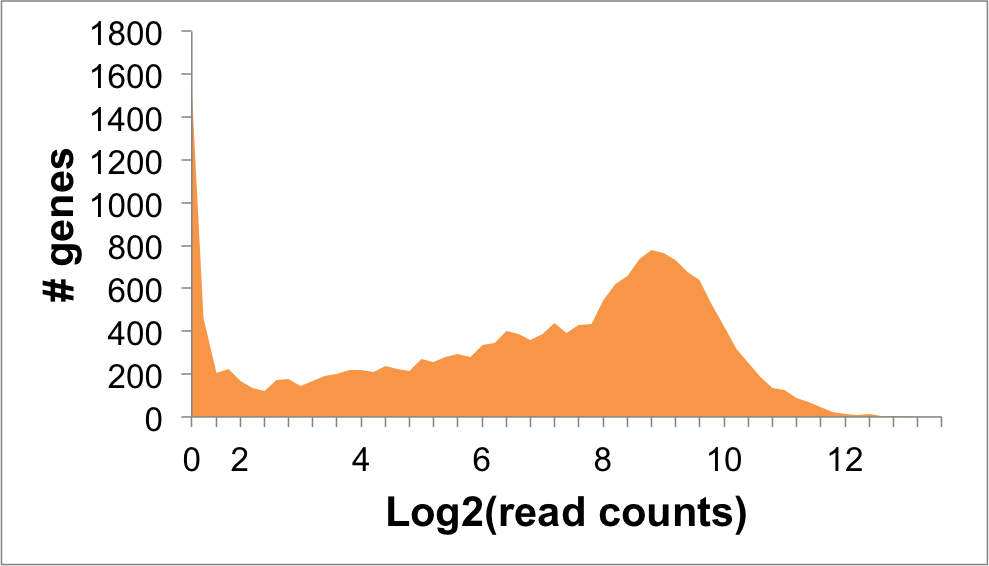
- Expression level (log2 read counts): 3.49
Expression Distribution
CASP9 Expression in NALM6 Cells: 3.49