MTOR
Gene Information
- Official Symbol: MTOR
- Official Name: mechanistic target of rapamycin kinase
- Aliases and Previous Symbols: N/A
- Entrez ID: 2475
- UniProt: P42345
- Interactions: BioGRID
- PubMed articles: Open PubMed
- OMIM: Open OMIM
Function Summary
- Entrez Summary: The protein encoded by this gene belongs to a family of phosphatidylinositol kinase-related kinases. These kinases mediate cellular responses to stresses such as DNA damage and nutrient deprivation. This protein acts as the target for the cell-cycle arrest and immunosuppressive effects of the FKBP12-rapamycin complex. The ANGPTL7 gene is located in an intron of this gene. [provided by RefSeq, Sep 2008].
- UniProt Summary: Serine/threonine protein kinase which is a central regulator of cellular metabolism, growth and survival in response to hormones, growth factors, nutrients, energy and stress signals. MTOR directly or indirectly regulates the phosphorylation of at least 800 proteins. Functions as part of 2 structurally and functionally distinct signaling complexes mTORC1 and mTORC2 (mTOR complex 1 and 2). Activated mTORC1 up-regulates protein synthesis by phosphorylating key regulators of mRNA translation and ribosome synthesis. This includes phosphorylation of EIF4EBP1 and release of its inhibition toward the elongation initiation factor 4E (eiF4E). Moreover, phosphorylates and activates RPS6KB1 and RPS6KB2 that promote protein synthesis by modulating the activity of their downstream targets including ribosomal protein S6, eukaryotic translation initiation factor EIF4B, and the inhibitor of translation initiation PDCD4. Stimulates the pyrimidine biosynthesis pathway, both by acute regulation through RPS6KB1- mediated phosphorylation of the biosynthetic enzyme CAD, and delayed regulation, through transcriptional enhancement of the pentose phosphate pathway which produces 5-phosphoribosyl-1- pyrophosphate (PRPP), an allosteric activator of CAD at a later step in synthesis, this function is dependent on the mTORC1 complex. Regulates ribosome synthesis by activating RNA polymerase III-dependent transcription through phosphorylation and inhibition of MAF1 an RNA polymerase III-repressor. In parallel to protein synthesis, also regulates lipid synthesis through SREBF1/SREBP1 and LPIN1. To maintain energy homeostasis mTORC1 may also regulate mitochondrial biogenesis through regulation of PPARGC1A. mTORC1 also negatively regulates autophagy through phosphorylation of ULK1. Under nutrient sufficiency, phosphorylates ULK1 at 'Ser- 758', disrupting the interaction with AMPK and preventing activation of ULK1. Also prevents autophagy through phosphorylation of the autophagy inhibitor DAP. mTORC1 exerts a feedback control on upstream growth factor signaling that includes phosphorylation and activation of GRB10 a INSR-dependent signaling suppressor. Among other potential targets mTORC1 may phosphorylate CLIP1 and regulate microtubules. As part of the mTORC2 complex MTOR may regulate other cellular processes including survival and organization of the cytoskeleton. Plays a critical role in the phosphorylation at 'Ser-473' of AKT1, a pro-survival effector of phosphoinositide 3-kinase, facilitating its activation by PDK1. mTORC2 may regulate the actin cytoskeleton, through phosphorylation of PRKCA, PXN and activation of the Rho-type guanine nucleotide exchange factors RHOA and RAC1A or RAC1B. mTORC2 also regulates the phosphorylation of SGK1 at 'Ser-422' (PubMed:12087098, PubMed:12150925, PubMed:12150926, PubMed:12231510, PubMed:12718876, PubMed:14651849, PubMed:15268862, PubMed:15467718, PubMed:15545625, PubMed:15718470, PubMed:18497260, PubMed:18762023, PubMed:18925875, PubMed:20516213, PubMed:20537536, PubMed:21659604, PubMed:23429703, PubMed:23429704, PubMed:25799227, PubMed:26018084). Regulates osteoclastogenesis by adjusting the expression of CEBPB isoforms (By similarity). {ECO:0000250|UniProtKB:Q9JLN9, ECO:0000269|PubMed:12087098, ECO:0000269|PubMed:12150925, ECO:0000269|PubMed:12150926, ECO:0000269|PubMed:12231510, ECO:0000269|PubMed:12718876, ECO:0000269|PubMed:14651849, ECO:0000269|PubMed:15268862, ECO:0000269|PubMed:15467718, ECO:0000269|PubMed:15545625, ECO:0000269|PubMed:15718470, ECO:0000269|PubMed:18497260, ECO:0000269|PubMed:18762023, ECO:0000269|PubMed:18925875, ECO:0000269|PubMed:20516213, ECO:0000269|PubMed:20537536, ECO:0000269|PubMed:21659604, ECO:0000269|PubMed:23429703, ECO:0000269|PubMed:23429704, ECO:0000269|PubMed:25799227, ECO:0000269|PubMed:26018084}.
Pfam Domains GO Terms
Pfam Domains
| Rapamycin bind |
| FAT |
| FATC |
| PI3 PI4 kinase |
| DUF3385 |
GO Terms
| negative regulation of iodide transport |
| negative regulation of cholangiocyte apoptotic process |
| positive regulation of cholangiocyte proliferation |
| regulation of iodide transmembrane transport |
| regulation of granulosa cell proliferation |
| regulation of cholangiocyte proliferation |
| regulation of cholangiocyte apoptotic process |
| positive regulation of granulosa cell proliferation |
| regulation of iodide transport |
| negative regulation of iodide transmembrane transport |
| positive regulation of skeletal muscle hypertrophy |
| negative regulation of muscle atrophy |
| positive regulation of wound healing, spreading of epidermal cells |
| negative regulation of inorganic anion transmembrane transport |
| regulation of carbohydrate utilization |
| T-helper 1 cell lineage commitment |
| regulation of locomotor rhythm |
| RNA polymerase III type 1 promoter DNA binding |
| RNA polymerase III type 2 promoter DNA binding |
| regulation of skeletal muscle hypertrophy |
| TFIIIC-class transcription factor complex binding |
| RNA polymerase III type 3 promoter DNA binding |
| regulation of muscle atrophy |
| positive regulation of cytoplasmic translational initiation |
| positive regulation of eating behavior |
| positive regulation of neuron maturation |
| regulation of cytoplasmic translational initiation |
| de novo pyrimidine nucleobase biosynthetic process |
| regulation of translation at synapse, modulating synaptic transmission |
| regulation of translation at synapse |
| regulation of wound healing, spreading of epidermal cells |
| voluntary musculoskeletal movement |
| TORC1 signaling |
| regulation of inorganic anion transmembrane transport |
| TORC1 complex |
| regulation of eating behavior |
| positive regulation of sensory perception of pain |
| positive regulation of muscle adaptation |
| pyrimidine nucleobase biosynthetic process |
| positive regulation of cell growth involved in cardiac muscle cell development |
| positive regulation of cell maturation |
| T-helper 1 cell differentiation |
| positive regulation of transcription by RNA polymerase III |
| positive regulation of feeding behavior |
| negative regulation of cell size |
| regulation of neuron maturation |
| cellular response to leucine |
| T-helper cell lineage commitment |
| cellular response to leucine starvation |
| positive regulation of transcription of nucleolar large rRNA by RNA polymerase I |
| CD4-positive, alpha-beta T cell lineage commitment |
| negative regulation of muscle adaptation |
| positive regulation of cytoplasmic translation |
| TORC2 complex |
| anoikis |
| positive regulation of keratinocyte migration |
| response to leucine |
| alpha-beta T cell lineage commitment |
| regulation of transcription of nucleolar large rRNA by RNA polymerase I |
| negative regulation of calcineurin-mediated signaling |
| negative regulation of calcineurin-NFAT signaling cascade |
| regulation of keratinocyte migration |
| negative regulation of anion transmembrane transport |
| CD4-positive or CD8-positive, alpha-beta T cell lineage commitment |
| regulation of skeletal muscle adaptation |
| positive regulation of glial cell proliferation |
| regulation of brown fat cell differentiation |
| postsynaptic cytosol |
| regulation of cell growth involved in cardiac muscle cell development |
| translation regulator activity |
| regulation of fatty acid beta-oxidation |
| positive regulation of cardiac muscle cell differentiation |
| regulation of response to food |
| T-helper 1 type immune response |
| nucleobase biosynthetic process |
| T cell lineage commitment |
| positive regulation of lamellipodium assembly |
| positive regulation of phosphoprotein phosphatase activity |
| positive regulation of transcription by RNA polymerase I |
| pyrimidine nucleobase metabolic process |
| regulation of cell maturation |
| regulation of transcription by RNA polymerase III |
| positive regulation of oligodendrocyte differentiation |
| ruffle organization |
| regulation of response to nutrient levels |
| regulation of response to extracellular stimulus |
| positive T cell selection |
| T-helper cell differentiation |
| regulation of anion transmembrane transport |
| CD4-positive, alpha-beta T cell differentiation involved in immune response |
| alpha-beta T cell differentiation involved in immune response |
| negative regulation of anion transport |
| alpha-beta T cell activation involved in immune response |
| regulation of feeding behavior |
| positive regulation of lamellipodium organization |
| positive regulation of cardiocyte differentiation |
| positive regulation of behavior |
| TOR signaling |
| regulation of glycogen biosynthetic process |
| regulation of glucan biosynthetic process |
| negative regulation of calcium-mediated signaling |
| positive regulation of translational initiation |
| regulation of glial cell proliferation |
| regulation of cytoplasmic translation |
| positive regulation of cardiac muscle hypertrophy |
| regulation of fatty acid oxidation |
| regulation of lamellipodium assembly |
| positive regulation of muscle hypertrophy |
| regulation of transcription by RNA polymerase I |
| T cell differentiation involved in immune response |
| long-term memory |
| positive regulation of myotube differentiation |
| activation of protein kinase B activity |
| response to isoquinoline alkaloid |
| negative regulation of macroautophagy |
| positive regulation of cardiac muscle tissue growth |
| response to morphine |
| positive regulation of phosphatase activity |
| regulation of calcineurin-NFAT signaling cascade |
| positive regulation of morphogenesis of an epithelium |
| CD4-positive, alpha-beta T cell differentiation |
| regulation of calcineurin-mediated signaling |
| regulation of glycogen metabolic process |
| phosphoprotein binding |
| regulation of cardiac muscle cell differentiation |
| regulation of polysaccharide biosynthetic process |
| positive regulation of heart growth |
| CD4-positive, alpha-beta T cell activation |
| regulation of oligodendrocyte differentiation |
| positive regulation of nitric oxide biosynthetic process |
| regulation of sensory perception of pain |
| T cell selection |
| positive regulation of nitric oxide metabolic process |
| regulation of sensory perception |
| positive regulation of glial cell differentiation |
| negative regulation of epithelial cell apoptotic process |
| regulation of myelination |
| regulation of lamellipodium organization |
| positive regulation of dendritic spine development |
| regulation of polysaccharide metabolic process |
| mRNA stabilization |
| nucleobase metabolic process |
| musculoskeletal movement |
| cellular response to amino acid starvation |
| multicellular organismal movement |
| positive regulation of protein dephosphorylation |
| positive regulation of cardiac muscle tissue development |
| response to amino acid starvation |
| positive regulation of epithelial to mesenchymal transition |
| RNA stabilization |
| positive regulation of organ growth |
| visual learning |
| regulation of cardiocyte differentiation |
| positive regulation of reactive oxygen species biosynthetic process |
| alpha-beta T cell differentiation |
| positive regulation of stress fiber assembly |
| social behavior |
| heart valve morphogenesis |
| negative regulation of mRNA catabolic process |
| intraspecies interaction between organisms |
| visual behavior |
| regulation of lipid catabolic process |
| positive regulation of wound healing |
| response to cocaine |
| ribosome binding |
| regulation of cardiac muscle hypertrophy |
| regulation of nitric oxide biosynthetic process |
| pyrimidine-containing compound biosynthetic process |
| regulation of myotube differentiation |
| positive regulation of dephosphorylation |
| positive regulation of striated muscle cell differentiation |
| regulation of cardiac muscle tissue growth |
| regulation of muscle hypertrophy |
| negative regulation of RNA catabolic process |
| cardiac muscle cell development |
| heart valve development |
| alpha-beta T cell activation |
| positive regulation of actin filament bundle assembly |
| positive regulation of nervous system process |
| energy reserve metabolic process |
| regulation of heart growth |
| maternal process involved in female pregnancy |
| T cell activation involved in immune response |
| positive regulation of response to wounding |
| cell aging |
| response to activity |
| cardiac cell development |
| regulation of osteoclast differentiation |
| multi-organism behavior |
| positive regulation of muscle organ development |
| cellular response to amino acid stimulus |
| positive regulation of striated muscle tissue development |
| regulation of glial cell differentiation |
| positive regulation of gliogenesis |
| positive regulation of muscle tissue development |
| regulation of behavior |
| negative regulation of protein ubiquitination |
| positive regulation of dendrite development |
| regulation of dendritic spine development |
| endomembrane system |
| cardiac muscle contraction |
| associative learning |
| response to anesthetic |
| regulation of translational initiation |
| regulation of epithelial cell apoptotic process |
| negative regulation of mRNA metabolic process |
| regulation of cardiac muscle tissue development |
| positive regulation of lipid biosynthetic process |
| regulation of cellular response to heat |
| regulation of stress fiber assembly |
| kinase activity |
| regulation of membrane permeability |
| multicellular organism growth |
| peptidyl-threonine phosphorylation |
| negative regulation of autophagy |
| negative regulation of protein modification by small protein conjugation or removal |
| regulation of epithelial to mesenchymal transition |
| regulation of muscle adaptation |
| positive regulation of smooth muscle cell proliferation |
| regulation of reactive oxygen species biosynthetic process |
| regulation of fatty acid metabolic process |
| positive regulation of muscle cell differentiation |
| heart contraction |
| cardiac muscle cell differentiation |
| regulation of actomyosin structure organization |
| post-embryonic development |
| peptidyl-threonine modification |
| positive regulation of actin filament polymerization |
| positive regulation of neuron death |
| regulation of actin filament bundle assembly |
| positive regulation of endothelial cell proliferation |
| regulation of organ growth |
| regulation of carbohydrate biosynthetic process |
| negative regulation of ion transmembrane transport |
| regulation of anion transport |
| positive regulation of reactive oxygen species metabolic process |
| regulation of calcium-mediated signaling |
| PML body |
| heart process |
| positive regulation of plasma membrane bounded cell projection assembly |
| regulation of striated muscle cell differentiation |
| pyrimidine-containing compound metabolic process |
| spinal cord development |
| striated muscle contraction |
| lymphocyte activation involved in immune response |
| response to alkaloid |
| regulation of glucose metabolic process |
| regulation of circadian rhythm |
| response to amino acid |
| regulation of gliogenesis |
| cardiocyte differentiation |
| regulation of myeloid leukocyte differentiation |
| negative regulation of transmembrane transport |
| regulation of phosphoprotein phosphatase activity |
| memory |
| regulation of fat cell differentiation |
| positive regulation of translation |
| positive regulation of protein polymerization |
| regulation of endothelial cell proliferation |
| regulation of striated muscle tissue development |
| regulation of smooth muscle cell proliferation |
| regulation of muscle tissue development |
| T cell differentiation |
| striated muscle cell development |
| regulation of muscle organ development |
| regulation of nervous system process |
| regulation of wound healing |
| regulation of cellular carbohydrate metabolic process |
| regulation of protein dephosphorylation |
| positive regulation of epithelial cell migration |
| positive regulation of lipid metabolic process |
| cell cycle arrest |
| learning |
| negative regulation of ion transport |
| muscle cell development |
| regulation of dendrite development |
| cellular response to starvation |
| positive regulation of cellular amide metabolic process |
| regulation of muscle cell differentiation |
| regulation of generation of precursor metabolites and energy |
| cardiac muscle tissue development |
| mitochondrial outer membrane |
| positive regulation of cell growth |
| regulation of actin filament polymerization |
| positive regulation of protein kinase B signaling |
| regulation of response to wounding |
| positive regulation of developmental growth |
| regulation of cellular ketone metabolic process |
| regulation of macroautophagy |
| peptidyl-serine phosphorylation |
| regulation of phosphatase activity |
| regulation of mRNA stability |
| regulation of reactive oxygen species metabolic process |
| regulation of morphogenesis of an epithelium |
| female pregnancy |
| regulation of cell size |
| regulation of actin polymerization or depolymerization |
| regulation of actin filament length |
| response to ammonium ion |
| regulation of RNA stability |
| regulation of lipid biosynthetic process |
| cellular response to hypoxia |
| positive regulation of epithelial cell proliferation |
| positive regulation of peptidyl-tyrosine phosphorylation |
| response to starvation |
| protein autophosphorylation |
| positive regulation of supramolecular fiber organization |
| cellular response to decreased oxygen levels |
| peptidyl-serine modification |
| regulation of protein ubiquitination |
| regulation of plasma membrane bounded cell projection assembly |
| striated muscle cell differentiation |
| regulation of mRNA catabolic process |
| regulation of cell projection assembly |
| regulation of carbohydrate metabolic process |
| cellular response to acid chemical |
| regulation of dephosphorylation |
| multi-multicellular organism process |
| cellular response to oxygen levels |
| response to nutrient |
| regulation of protein kinase B signaling |
| positive regulation of cytoskeleton organization |
| regulation of epithelial cell migration |
| regulation of protein polymerization |
| regulation of myeloid cell differentiation |
| response to insulin |
| regulation of protein modification by small protein conjugation or removal |
| cellular response to nutrient levels |
| regulation of muscle system process |
| energy derivation by oxidation of organic compounds |
| T cell activation |
| lymphocyte differentiation |
| protein kinase activity |
| protein domain specific binding |
| muscle cell differentiation |
| cell fate commitment |
| positive regulation of protein complex assembly |
| heart morphogenesis |
| muscle contraction |
| lysosome |
| negative regulation of cellular catabolic process |
| regulation of peptidyl-tyrosine phosphorylation |
| germ cell development |
| positive regulation of growth |
| learning or memory |
| regulation of actin filament organization |
| cellular response to extracellular stimulus |
| regulation of leukocyte differentiation |
| rhythmic process |
| adaptive immune response based on somatic recombination of immune receptors built from immunoglobulin superfamily domains |
| aging |
| positive regulation of neuron projection development |
| striated muscle tissue development |
| muscle tissue development |
| cognition |
| muscle system process |
| lysosomal membrane |
| response to xenobiotic stimulus |
| response to light stimulus |
| negative regulation of catabolic process |
| regulation of neuron death |
| activation of protein kinase activity |
| regulation of mRNA metabolic process |
| regulation of developmental growth |
| leukocyte differentiation |
| regulation of autophagy |
| regulation of epithelial cell proliferation |
| cellular response to external stimulus |
| regulation of actin cytoskeleton organization |
| response to hypoxia |
| response to acid chemical |
| glutamatergic synapse |
| regulation of supramolecular fiber organization |
| regulation of neurotransmitter levels |
| regulation of translation |
| cellular process involved in reproduction in multicellular organism |
| response to decreased oxygen levels |
| protein serine/threonine kinase activity |
| positive regulation of neuron differentiation |
| neuronal cell body |
| regulation of cellular component size |
| response to oxygen levels |
| positive regulation of cell projection organization |
| lymphocyte activation |
| regulation of actin filament-based process |
| developmental growth |
| blood circulation |
| response to peptide hormone |
| growth |
| regulation of lipid metabolic process |
| circulatory system process |
| regulation of cellular amide metabolic process |
| negative regulation of protein phosphorylation |
| regulation of cell growth |
| dendrite |
| generation of precursor metabolites and energy |
| regulation of small molecule metabolic process |
| response to radiation |
| modulation of chemical synaptic transmission |
| regulation of trans-synaptic signaling |
| negative regulation of phosphorylation |
| regulation of protein complex assembly |
| regulation of hemopoiesis |
| protein kinase binding |
| positive regulation of neurogenesis |
| response to peptide |
| muscle structure development |
| regulation of ion transmembrane transport |
| wound healing |
| regulation of GTPase activity |
| negative regulation of transport |
| regulation of neuron projection development |
| response to nutrient levels |
| positive regulation of cell migration |
| negative regulation of intracellular signal transduction |
| regulation of anatomical structure size |
| positive regulation of cellular component biogenesis |
| positive regulation of cell motility |
| posttranscriptional regulation of gene expression |
| heart development |
| response to extracellular stimulus |
| positive regulation of protein kinase activity |
| positive regulation of nervous system development |
| positive regulation of cellular component movement |
| nucleobase-containing small molecule metabolic process |
| regulation of cytoskeleton organization |
| positive regulation of cell development |
| positive regulation of locomotion |
| hemopoiesis |
| negative regulation of phosphate metabolic process |
| negative regulation of phosphorus metabolic process |
| regulation of transmembrane transport |
| response to wounding |
| behavior |
| negative regulation of cell cycle |
| positive regulation of kinase activity |
| regulation of system process |
| negative regulation of protein modification process |
| cellular response to organonitrogen compound |
| hematopoietic or lymphoid organ development |
| adaptive immune response |
| Golgi membrane |
| positive regulation of organelle organization |
| leukocyte activation involved in immune response |
| cell activation involved in immune response |
| immune system development |
| regulation of neuron differentiation |
| positive regulation of transferase activity |
| cellular response to nitrogen compound |
| developmental process involved in reproduction |
| regulation of growth |
| protein catabolic process |
| gamete generation |
| regulation of plasma membrane bounded cell projection organization |
| positive regulation of cell death |
| regulation of ion transport |
| regulation of cell projection organization |
| regulation of cellular response to stress |
| brain development |
| positive regulation of hydrolase activity |
| head development |
| regulation of protein kinase activity |
| regulation of neurogenesis |
| multicellular organismal reproductive process |
| sexual reproduction |
| regulation of cellular catabolic process |
| multicellular organism reproduction |
| regulation of cell migration |
| circulatory system development |
| regulation of kinase activity |
| peptidyl-amino acid modification |
| negative regulation of apoptotic process |
| negative regulation of programmed cell death |
| response to hormone |
| regulation of cell motility |
| positive regulation of cell population proliferation |
| response to organic cyclic compound |
| apoptotic process |
| regulation of nervous system development |
| leukocyte activation |
| regulation of cell development |
| endoplasmic reticulum membrane |
| animal organ morphogenesis |
| regulation of cellular component biogenesis |
| oxidation-reduction process |
| positive regulation of cell differentiation |
| protein phosphorylation |
| regulation of transferase activity |
| central nervous system development |
| regulation of locomotion |
| multi-organism reproductive process |
| negative regulation of cell death |
| regulation of catabolic process |
| regulation of cellular component movement |
| cell cycle process |
| response to organonitrogen compound |
| positive regulation of protein phosphorylation |
| response to drug |
| positive regulation of intracellular signal transduction |
| negative regulation of cellular protein metabolic process |
| macromolecule catabolic process |
| programmed cell death |
| cellular response to oxygen-containing compound |
| positive regulation of phosphorylation |
| regulation of anatomical structure morphogenesis |
| organonitrogen compound catabolic process |
| identical protein binding |
| cell activation |
| response to nitrogen compound |
| immune effector process |
| cell death |
| regulation of response to external stimulus |
| negative regulation of protein metabolic process |
| plasma membrane bounded cell projection organization |
| positive regulation of phosphorus metabolic process |
| positive regulation of phosphate metabolic process |
| cell projection organization |
| response to abiotic stimulus |
| heterocycle biosynthetic process |
| regulation of cell cycle |
| negative regulation of multicellular organismal process |
| positive regulation of cellular component organization |
| cellular response to endogenous stimulus |
| positive regulation of protein modification process |
| negative regulation of signal transduction |
| regulation of hydrolase activity |
| phosphorylation |
| regulation of organelle organization |
| organic cyclic compound biosynthetic process |
| negative regulation of RNA metabolic process |
| cell cycle |
| negative regulation of cell communication |
| negative regulation of signaling |
| positive regulation of developmental process |
| nervous system process |
| organonitrogen compound biosynthetic process |
| reproductive process |
| reproduction |
| positive regulation of catalytic activity |
| negative regulation of nucleobase-containing compound metabolic process |
| regulation of protein phosphorylation |
| response to endogenous stimulus |
| regulation of response to stress |
| ATP binding |
| generation of neurons |
| regulation of apoptotic process |
| positive regulation of transcription, DNA-templated |
| response to oxygen-containing compound |
| regulation of programmed cell death |
| regulation of phosphorylation |
| positive regulation of cellular protein metabolic process |
| regulation of cell population proliferation |
| negative regulation of response to stimulus |
| neurogenesis |
| cellular nitrogen compound biosynthetic process |
| positive regulation of nucleic acid-templated transcription |
| positive regulation of RNA biosynthetic process |
| cell development |
| positive regulation of signal transduction |
| regulation of immune system process |
| regulation of cell death |
| intracellular signal transduction |
| cellular response to stress |
| positive regulation of protein metabolic process |
| positive regulation of RNA metabolic process |
| positive regulation of multicellular organismal process |
| small molecule metabolic process |
| tissue development |
| organic substance catabolic process |
| positive regulation of molecular function |
| regulation of phosphate metabolic process |
| regulation of phosphorus metabolic process |
| regulation of cell differentiation |
| positive regulation of cell communication |
| positive regulation of signaling |
| regulation of intracellular signal transduction |
| regulation of protein modification process |
| regulation of transport |
| immune response |
| positive regulation of nucleobase-containing compound metabolic process |
| positive regulation of macromolecule biosynthetic process |
| system process |
| positive regulation of cellular biosynthetic process |
| positive regulation of gene expression |
| membrane |
| positive regulation of biosynthetic process |
CRISPR Data
Compound Hit Most Correlated Genes in Chemogenomics Tissues where Essential in the Avana Dataset (DepMap 20Q1)
Compound Hit
Most Correlated Genes in Chemogenomics
| Gene | Correlation |
|---|---|
| RPTOR | 0.794 |
| WDR24 | 0.665 |
| HARS | 0.645 |
| DOHH | 0.624 |
| GMPPB | 0.612 |
| MLST8 | 0.601 |
| RNMT | 0.597 |
| CCDC101 | 0.594 |
| GFPT1 | 0.591 |
| THG1L | 0.587 |
| TTI2 | 0.578 |
| NSD1 | 0.568 |
| CSNK2B | 0.568 |
| MEAF6 | 0.564 |
| PELO | 0.564 |
| EIF4E | 0.559 |
| HSPD1 | 0.557 |
| GTF3C3 | 0.552 |
| BAP1 | 0.55 |
| ID3 | 0.547 |
| GNB1L | 0.546 |
| WDR59 | 0.546 |
| TRIM28 | 0.539 |
| PMM2 | 0.538 |
| PLAA | 0.535 |
| FAF2 | 0.535 |
| MIOS | 0.533 |
| VHL | 0.53 |
| CBFB | 0.525 |
| BAK1 | 0.522 |
| TLE4 | 0.519 |
| APAF1 | 0.517 |
| MED16 | 0.514 |
| TRIAP1 | 0.514 |
| UAP1 | 0.514 |
| SERF2 | 0.513 |
| HCCS | 0.512 |
| AARS | 0.511 |
| RPN1 | 0.508 |
| MED23 | 0.508 |
| ENY2 | 0.504 |
| PPP2R3C | 0.504 |
| ALG1 | 0.503 |
| DPAGT1 | 0.497 |
| CASP9 | 0.495 |
| CCT7 | 0.495 |
| SRP14 | 0.494 |
| UBE2G2 | 0.491 |
| MLLT1 | 0.49 |
| ALG2 | 0.489 |
| DHPS | 0.488 |
| ALG13 | 0.487 |
| LAMTOR4 | 0.486 |
| NARS | 0.48 |
| PDPK1 | 0.48 |
| MARS | 0.48 |
| DAD1 | 0.479 |
| VDAC2 | 0.479 |
| TRIM33 | 0.478 |
| UBQLN1 | 0.478 |
| TTI1 | 0.477 |
| RTCB | 0.476 |
| CYCS | 0.475 |
| ATP5J | 0.474 |
| TBP | 0.471 |
| POLR3B | 0.469 |
| MAPK14 | 0.467 |
| ORAOV1 | 0.467 |
| SPCS3 | 0.465 |
| UHRF1 | 0.464 |
| PAM16 | 0.462 |
| TMEM41B | 0.461 |
| LAMTOR5 | 0.46 |
| DIABLO | 0.459 |
| SEH1L | 0.458 |
| MARCH5 | 0.457 |
| ZNF592 | 0.456 |
| TSEN54 | 0.455 |
| VMP1 | 0.453 |
| FBXO11 | 0.453 |
| EPRS | 0.452 |
| LSM11 | 0.452 |
| EIF4G1 | 0.451 |
| TRNT1 | 0.451 |
| BPTF | 0.449 |
| OTUD5 | 0.446 |
| NUPL2 | 0.445 |
| GTF3A | 0.443 |
| TELO2 | 0.442 |
| POLR3H | 0.442 |
| UTP23 | 0.438 |
| THOC6 | 0.437 |
| ZNF608 | 0.435 |
| EXOC4 | 0.435 |
| EIF3F | 0.435 |
| TAZ | 0.435 |
| SSBP2 | 0.433 |
| TRIP12 | 0.432 |
| TSEN2 | 0.431 |
| CMTR1 | 0.431 |
| NAE1 | 0.43 |
| PDAP1 | 0.43 |
| BRPF1 | 0.43 |
| HHEX | 0.429 |
| ALG5 | 0.427 |
| DDOST | 0.425 |
| VRK1 | 0.425 |
| PISD | 0.425 |
| PAPOLA | 0.423 |
| LSMD1 | 0.422 |
| SRP72 | 0.422 |
| SMARCD1 | 0.422 |
| DPF2 | 0.421 |
| CRLS1 | 0.418 |
| ADSL | 0.418 |
| GTF3C4 | 0.417 |
| SRP68 | 0.415 |
| DHDDS | 0.413 |
| PIK3R4 | 0.413 |
| LAMTOR2 | 0.412 |
| KDSR | 0.411 |
| STAU1 | 0.41 |
| CTDNEP1 | 0.41 |
| CARS | 0.408 |
| DR1 | 0.408 |
| N6AMT1 | 0.405 |
| SEC61G | 0.405 |
| WDR1 | 0.405 |
| SLC35B1 | 0.405 |
| TIMM13 | 0.405 |
| GTF3C2 | 0.404 |
| ROMO1 | 0.404 |
| CHCHD4 | 0.404 |
| OSGEP | 0.402 |
| ZFX | 0.402 |
| EXOC3 | 0.401 |
| BTAF1 | 0.401 |
| MAPKAP1 | 0.4 |
| TBCA | 0.4 |
| GTF3C6 | 0.4 |
| UBE2K | 0.4 |
Tissues where Essential in the Avana Dataset (DepMap 20Q1)
Global Fraction of Cell Lines Where Essential: 687/739
| Tissue | Fraction Of Cell Lines Where Essential |
|---|---|
| 1290807.0 | 1/1 |
| 909776.0 | 1/1 |
| bile duct | 26/28 |
| blood | 22/28 |
| bone | 24/26 |
| breast | 32/33 |
| central nervous system | 56/56 |
| cervix | 3/4 |
| colorectal | 16/17 |
| esophagus | 12/13 |
| fibroblast | 1/1 |
| gastric | 14/16 |
| kidney | 21/21 |
| liver | 19/20 |
| lung | 75/75 |
| lymphocyte | 15/16 |
| ovary | 24/26 |
| pancreas | 22/24 |
| peripheral nervous system | 14/16 |
| plasma cell | 15/15 |
| prostate | 1/1 |
| skin | 23/24 |
| soft tissue | 9/9 |
| thyroid | 2/2 |
| upper aerodigestive | 17/22 |
| urinary tract | 26/29 |
| uterus | 5/5 |
Essentiality in NALM6
- Essentiality Rank: 762
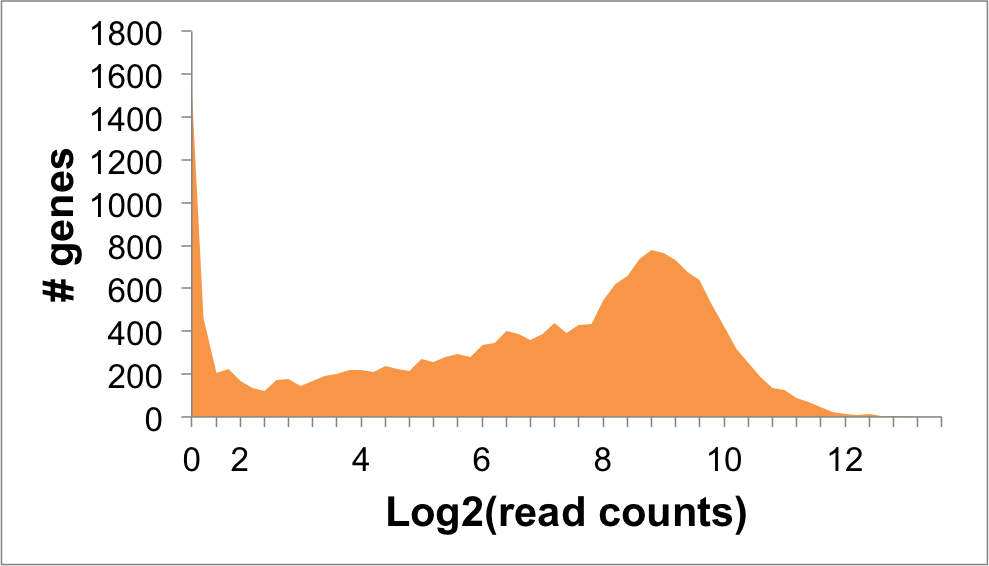
- Expression level (log2 read counts): 7.6
Expression Distribution
MTOR Expression in NALM6 Cells: 7.6