BAK1
Gene Information
- Official Symbol: BAK1
- Official Name: BCL2 antagonist/killer 1
- Aliases and Previous Symbols: N/A
- Entrez ID: 578
- UniProt: Q16611
- Interactions: BioGRID
- PubMed articles: Open PubMed
- OMIM: Open OMIM
Function Summary
- Entrez Summary: N/A
- UniProt Summary: Plays a role in the mitochondrial apoptosic process. Upon arrival of cell death signals, promotes mitochondrial outer membrane (MOM) permeabilization by oligomerizing to form pores within the MOM. This releases apoptogenic factors into the cytosol, including cytochrome c, promoting the activation of caspase 9 which in turn processes and activates the effector caspases. {ECO:0000269|PubMed:17157251, ECO:0000269|PubMed:8521816}.
Pfam Domains GO Terms
Pfam Domains
| Bcl-2 |
GO Terms
| BAK complex |
| B cell negative selection |
| B cell selection |
| post-embryonic camera-type eye morphogenesis |
| fibroblast apoptotic process |
| BH domain binding |
| apoptotic process involved in blood vessel morphogenesis |
| thymocyte apoptotic process |
| post-embryonic eye morphogenesis |
| positive regulation of IRE1-mediated unfolded protein response |
| activation of cysteine-type endopeptidase activity involved in apoptotic process by cytochrome c |
| response to mycotoxin |
| post-embryonic camera-type eye development |
| post-embryonic animal organ morphogenesis |
| B cell apoptotic process |
| negative regulation of endoplasmic reticulum calcium ion concentration |
| regulation of protein heterodimerization activity |
| vagina development |
| post-embryonic animal morphogenesis |
| regulation of IRE1-mediated unfolded protein response |
| pore complex |
| positive regulation of endoplasmic reticulum unfolded protein response |
| establishment or maintenance of transmembrane electrochemical gradient |
| T cell apoptotic process |
| activation of cysteine-type endopeptidase activity |
| post-embryonic animal organ development |
| apoptotic process involved in morphogenesis |
| response to UV-C |
| mitochondrial fusion |
| female genitalia development |
| lymphocyte apoptotic process |
| integral component of mitochondrial outer membrane |
| endoplasmic reticulum calcium ion homeostasis |
| regulation of protein homodimerization activity |
| release of cytochrome c from mitochondria |
| leukocyte apoptotic process |
| B cell homeostasis |
| regulation of endoplasmic reticulum unfolded protein response |
| negative regulation of peptidyl-serine phosphorylation |
| apoptotic process involved in development |
| positive regulation of release of cytochrome c from mitochondria |
| extrinsic apoptotic signaling pathway in absence of ligand |
| signal transduction in absence of ligand |
| blood vessel remodeling |
| intrinsic apoptotic signaling pathway in response to endoplasmic reticulum stress |
| positive regulation of mitochondrial outer membrane permeabilization involved in apoptotic signaling pathway |
| positive regulation of response to endoplasmic reticulum stress |
| endocrine pancreas development |
| zymogen activation |
| regulation of mitochondrial outer membrane permeabilization involved in apoptotic signaling pathway |
| genitalia development |
| regulation of release of cytochrome c from mitochondria |
| response to fungus |
| lymphocyte homeostasis |
| positive regulation of calcium ion transport into cytosol |
| response to gamma radiation |
| heat shock protein binding |
| apoptotic mitochondrial changes |
| leukocyte homeostasis |
| regulation of mitochondrial membrane potential |
| intrinsic apoptotic signaling pathway in response to DNA damage |
| regulation of mitochondrial membrane permeability |
| pancreas development |
| animal organ regeneration |
| cellular response to mechanical stimulus |
| regulation of membrane permeability |
| regulation of response to endoplasmic reticulum stress |
| cellular response to UV |
| activation of cysteine-type endopeptidase activity involved in apoptotic process |
| post-embryonic development |
| organelle fusion |
| extrinsic apoptotic signaling pathway |
| regulation of calcium ion transport into cytosol |
| tissue remodeling |
| chaperone binding |
| female sex differentiation |
| myeloid cell homeostasis |
| B cell differentiation |
| camera-type eye morphogenesis |
| cellular response to light stimulus |
| positive regulation of mitochondrion organization |
| response to hydrogen peroxide |
| positive regulation of calcium ion transport |
| endocrine system development |
| ion channel binding |
| response to ethanol |
| cellular response to unfolded protein |
| mitochondrial membrane organization |
| positive regulation of cysteine-type endopeptidase activity involved in apoptotic process |
| regulation of peptidyl-serine phosphorylation |
| response to UV |
| eye morphogenesis |
| intrinsic apoptotic signaling pathway |
| response to ionizing radiation |
| cellular response to topologically incorrect protein |
| appendage morphogenesis |
| limb morphogenesis |
| positive regulation of cysteine-type endopeptidase activity |
| B cell activation |
| regeneration |
| protein processing |
| response to unfolded protein |
| mitochondrial outer membrane |
| positive regulation of endopeptidase activity |
| cellular response to radiation |
| positive regulation of apoptotic signaling pathway |
| regulation of mitochondrion organization |
| appendage development |
| limb development |
| response to topologically incorrect protein |
| positive regulation of peptidase activity |
| response to reactive oxygen species |
| homeostasis of number of cells |
| response to mechanical stimulus |
| mitochondrial transport |
| regulation of cysteine-type endopeptidase activity involved in apoptotic process |
| regulation of protein binding |
| protein maturation |
| response to alcohol |
| lymphocyte differentiation |
| regulation of cysteine-type endopeptidase activity |
| regulation of calcium ion transport |
| sensory organ morphogenesis |
| response to endoplasmic reticulum stress |
| sex differentiation |
| positive regulation of ion transport |
| aging |
| positive regulation of cytosolic calcium ion concentration |
| apoptotic signaling pathway |
| response to antibiotic |
| response to light stimulus |
| camera-type eye development |
| cellular response to environmental stimulus |
| cellular response to abiotic stimulus |
| regulation of cytosolic calcium ion concentration |
| leukocyte differentiation |
| cellular response to external stimulus |
| positive regulation of proteolysis |
| eye development |
| visual system development |
| sensory system development |
| regulation of binding |
| lymphocyte activation |
| regulation of metal ion transport |
| response to oxidative stress |
| regulation of apoptotic signaling pathway |
| negative regulation of protein phosphorylation |
| blood vessel morphogenesis |
| regulation of endopeptidase activity |
| reproductive structure development |
| reproductive system development |
| regulation of membrane potential |
| cellular calcium ion homeostasis |
| response to radiation |
| mitochondrion organization |
| regulation of peptidase activity |
| negative regulation of phosphorylation |
| calcium ion homeostasis |
| cellular divalent inorganic cation homeostasis |
| blood vessel development |
| protein heterodimerization activity |
| divalent inorganic cation homeostasis |
| response to toxic substance |
| vasculature development |
| cardiovascular system development |
| response to inorganic substance |
| sensory organ development |
| cell population proliferation |
| hemopoiesis |
| cellular metal ion homeostasis |
| negative regulation of phosphate metabolic process |
| negative regulation of phosphorus metabolic process |
| negative regulation of protein modification process |
| hematopoietic or lymphoid organ development |
| positive regulation of organelle organization |
| metal ion homeostasis |
| cellular cation homeostasis |
| positive regulation of apoptotic process |
| cellular ion homeostasis |
| positive regulation of programmed cell death |
| immune system development |
| tube morphogenesis |
| developmental process involved in reproduction |
| negative regulation of cell population proliferation |
| positive regulation of cell death |
| regulation of ion transport |
| cation homeostasis |
| inorganic ion homeostasis |
| regulation of proteolysis |
| regulation of cellular response to stress |
| brain development |
| cellular chemical homeostasis |
| molecular function |
| positive regulation of hydrolase activity |
| cellular response to DNA damage stimulus |
| head development |
| ion homeostasis |
| tube development |
| membrane organization |
| circulatory system development |
| protein homodimerization activity |
| cellular homeostasis |
| regulation of cellular localization |
| response to organic cyclic compound |
| apoptotic process |
| leukocyte activation |
| ion transmembrane transport |
| animal organ morphogenesis |
| central nervous system development |
| positive regulation of transport |
| endoplasmic reticulum |
| response to drug |
| negative regulation of cellular protein metabolic process |
| programmed cell death |
| identical protein binding |
| cell activation |
| cell death |
| negative regulation of protein metabolic process |
| chemical homeostasis |
| response to abiotic stimulus |
| regulation of cell cycle |
| positive regulation of cellular component organization |
| mitochondrion |
| proteolysis |
| regulation of hydrolase activity |
| transmembrane transport |
| regulation of organelle organization |
| response to other organism |
| response to external biotic stimulus |
| response to biotic stimulus |
| ion transport |
| reproductive process |
| reproduction |
| positive regulation of catalytic activity |
| regulation of protein phosphorylation |
| regulation of response to stress |
| regulation of apoptotic process |
| response to oxygen-containing compound |
| regulation of programmed cell death |
| regulation of phosphorylation |
| positive regulation of cellular protein metabolic process |
| regulation of cell population proliferation |
| homeostatic process |
| positive regulation of signal transduction |
| regulation of cell death |
| intracellular signal transduction |
| cellular response to stress |
| positive regulation of protein metabolic process |
| negative regulation of gene expression |
| positive regulation of molecular function |
| regulation of phosphate metabolic process |
| regulation of phosphorus metabolic process |
| positive regulation of cell communication |
| positive regulation of signaling |
| regulation of protein modification process |
| regulation of transport |
| gene expression |
CRISPR Data
Compound Hit Most Correlated Genes in Chemogenomics Tissues where Essential in the Avana Dataset (DepMap 20Q1)
Compound Hit
Most Correlated Genes in Chemogenomics
| Gene | Correlation |
|---|---|
| MARCH5 | 0.846 |
| VDAC2 | 0.822 |
| APAF1 | 0.82 |
| CASP9 | 0.799 |
| UBQLN1 | 0.781 |
| PLAA | 0.759 |
| CYCS | 0.745 |
| HCCS | 0.698 |
| FAF2 | 0.691 |
| SERF2 | 0.691 |
| DOHH | 0.686 |
| DIABLO | 0.651 |
| STAU1 | 0.603 |
| THG1L | 0.589 |
| BAP1 | 0.586 |
| ATAD1 | 0.569 |
| MLST8 | 0.563 |
| ROMO1 | 0.563 |
| METAP2 | 0.561 |
| MFN1 | 0.554 |
| HSPD1 | 0.55 |
| RPTOR | 0.549 |
| UAP1 | 0.541 |
| ENY2 | 0.539 |
| PDPK1 | 0.538 |
| TRIAP1 | 0.535 |
| MTOR | 0.522 |
| GFPT1 | 0.522 |
| GMPPB | 0.518 |
| VHL | 0.512 |
| FECH | 0.511 |
| GABPA | 0.509 |
| NSD1 | 0.508 |
| CRLS1 | 0.505 |
| SRP14 | 0.503 |
| KCTD5 | 0.499 |
| KDSR | 0.494 |
| PPA2 | 0.492 |
| MAPKAP1 | 0.489 |
| WDR24 | 0.488 |
| TRIM28 | 0.482 |
| DDHD2 | 0.482 |
| ZZZ3 | 0.479 |
| FBXO11 | 0.478 |
| RAD23B | 0.477 |
| OPA1 | 0.472 |
| HARS | 0.471 |
| TAMM41 | 0.469 |
| RNMT | 0.468 |
| BCL2L11 | 0.46 |
| PPP2R3C | 0.46 |
| SRRD | 0.46 |
| ATP5J | 0.459 |
| PMM2 | 0.458 |
| DR1 | 0.458 |
| UBE2G2 | 0.457 |
| LAMTOR5 | 0.457 |
| ALAS1 | 0.456 |
| NAE1 | 0.452 |
| EIF3F | 0.451 |
| TAZ | 0.45 |
| ALG1 | 0.447 |
| CEPT1 | 0.446 |
| WDR59 | 0.445 |
| GNAS | 0.443 |
| UBE2M | 0.443 |
| ATP2A2 | 0.443 |
| CSNK2B | 0.442 |
| LAMTOR4 | 0.441 |
| DHPS | 0.438 |
| BPTF | 0.438 |
| UBA3 | 0.435 |
| PPP6C | 0.435 |
| ATXN10 | 0.434 |
| ELF2 | 0.432 |
| SLC25A26 | 0.431 |
| PMAIP1 | 0.431 |
| EXOC4 | 0.426 |
| DDX42 | 0.426 |
| TIMM13 | 0.425 |
| DPAGT1 | 0.424 |
| RTCB | 0.424 |
| CBFB | 0.423 |
| PPCS | 0.422 |
| SSB | 0.421 |
| ATP5A1 | 0.42 |
| N6AMT1 | 0.42 |
| GTF3C3 | 0.417 |
| PCBP1 | 0.417 |
| SEC61G | 0.416 |
| MEAF6 | 0.416 |
| RICTOR | 0.415 |
| MIOS | 0.415 |
| GEMIN7 | 0.414 |
| CD81 | 0.413 |
| RPE | 0.411 |
| TP53 | 0.41 |
| PISD | 0.41 |
| NUDC | 0.409 |
| ATP5B | 0.409 |
| ADSL | 0.407 |
| ATIC | 0.407 |
| GTF3A | 0.403 |
| BRWD1 | 0.403 |
| RNF214 | 0.402 |
| RPN1 | 0.402 |
| ID3 | 0.401 |
| ALG2 | 0.401 |
| UBE2K | 0.4 |
Tissues where Essential in the Avana Dataset (DepMap 20Q1)
Global Fraction of Cell Lines Where Essential: 2/739
| Tissue | Fraction Of Cell Lines Where Essential |
|---|---|
| 1290807.0 | 0/1 |
| 909776.0 | 0/1 |
| bile duct | 0/28 |
| blood | 0/28 |
| bone | 0/26 |
| breast | 0/33 |
| central nervous system | 0/56 |
| cervix | 0/4 |
| colorectal | 0/17 |
| esophagus | 0/13 |
| fibroblast | 0/1 |
| gastric | 0/16 |
| kidney | 0/21 |
| liver | 0/20 |
| lung | 0/75 |
| lymphocyte | 0/16 |
| ovary | 0/26 |
| pancreas | 0/24 |
| peripheral nervous system | 1/16 |
| plasma cell | 0/15 |
| prostate | 0/1 |
| skin | 0/24 |
| soft tissue | 0/9 |
| thyroid | 0/2 |
| upper aerodigestive | 0/22 |
| urinary tract | 0/29 |
| uterus | 0/5 |
Essentiality in NALM6
- Essentiality Rank: 16008
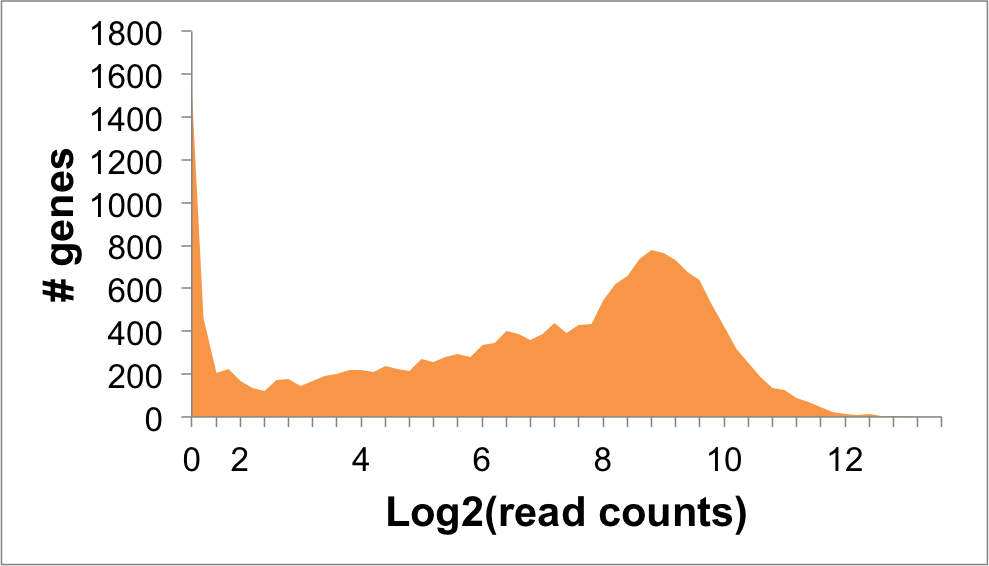
- Expression level (log2 read counts): 4.21
Expression Distribution
BAK1 Expression in NALM6 Cells: 4.21